

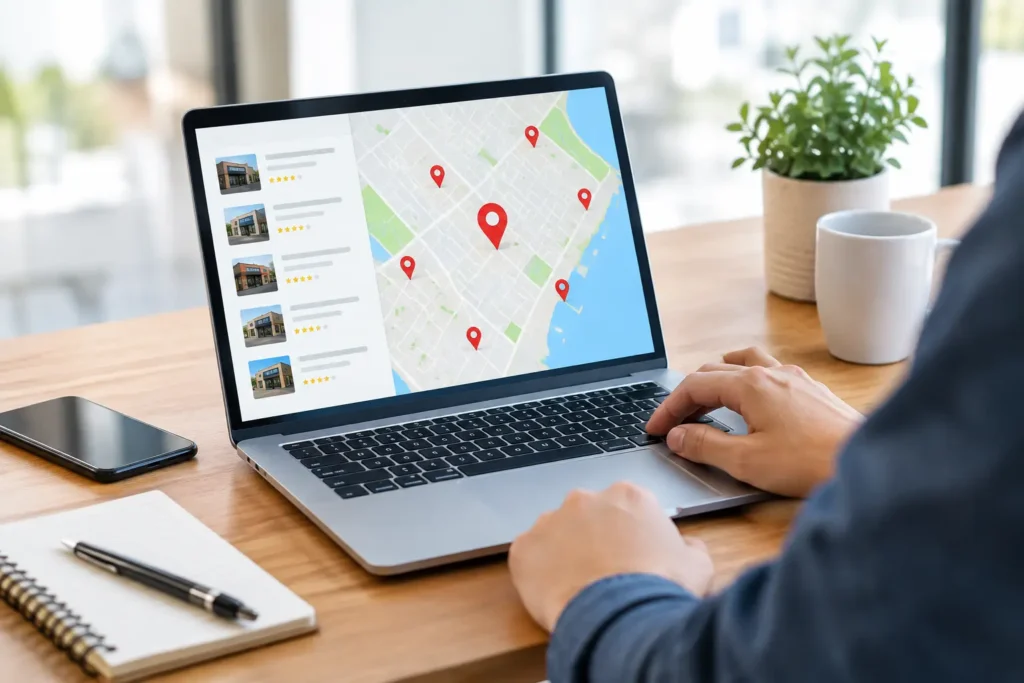
A customer needs a plumber, dentist, attorney, or contractor near them. They search Google, ask ChatGPT for recommendations, or pull up maps on their phone. If your address is wrong, your hours are outdated, or your business appears under two different phone numbers, that customer may never make the call.
Local directory listing management is the ongoing work of keeping your business information accurate, consistent, and visible across the places customers and search platforms use to find local companies. It is not glamorous work, but it directly supports the outcome that matters: more qualified local searches turning into real customers.
Why Local Listings Affect Revenue
Your business listing is often the first interaction a prospect has with your company. Before they visit your website, they may see your name, category, reviews, phone number, business hours, and service area in a map result or online directory. Those details shape whether they trust you enough to contact you.
For a local service business, a bad listing can create immediate friction. A customer drives to an old address. Someone calls a disconnected number. A homeowner sees conflicting business hours and chooses the next company in the results. Each problem may look small on its own, but together they cost calls, appointments, and sales.
Accurate listings also give search engines clearer signals about who you are, where you operate, and what you do. Google uses information from across the web to assess local businesses. AI-powered search tools also rely on publicly available business information when forming answers and recommendations. Consistency will not replace a strong website, reviews, or useful content, but it supports all of them.
What Local Directory Listing Management Includes
Effective local directory listing management starts with a complete inventory. Many businesses have more online listings than they realize. Old locations, previous phone numbers, former business names, duplicate profiles, and data created by third parties can all remain visible long after a change.
The first priority is establishing the correct core business information. This usually includes your legal or public-facing business name, address, primary phone number, website, hours, service areas, categories, and a clear description of your services. The details must reflect how customers can actually reach and work with you.
From there, listings need to be claimed, corrected, completed, and monitored across relevant platforms. Google Business Profile is the central priority for most local companies, but it is not the only place that matters. Apple Maps, Bing Places, major business directories, industry-specific directories, map platforms, and local citation sources can all influence how easily customers find accurate information.
Management also includes duplicate suppression. Duplicate listings divide reviews, create conflicting information, and confuse customers. In some cases, removing a duplicate is straightforward. In others, especially when the record was created from old data, it requires verification and follow-up. That is why this should be treated as recurring visibility work, not a one-time cleanup task.
Consistency Matters, But Context Matters Too
Business owners often hear that their name, address, and phone number must match everywhere, and the principle is sound. Consistent information makes it easier for search engines and customers to connect listings to the same company.
Still, consistency does not mean blindly copying every field into every directory. Platforms have different category options, character limits, service-area settings, and profile features. A restaurant, medical practice, and mobile repair company should not be presented in exactly the same way. The goal is consistent core facts plus complete, platform-appropriate information.
For example, a business that serves Orange County but does not receive customers at its home address should use service-area settings correctly rather than publishing an address that customers cannot visit. A business with seasonal hours should update them before customers encounter a locked door or unanswered phone.
A Practical Process for Better Local Visibility
The strongest approach begins with an audit, then moves into cleanup, optimization, and ongoing monitoring. This process prevents businesses from spending time adding new listings while major inaccuracies remain unresolved.
1. Audit Your Current Local Presence
Start by searching your business name, phone number, address, former addresses, and variations of your company name. Look for inaccurate profiles, duplicates, missing listings, and listings that point to old websites or social accounts.
Pay close attention to high-visibility platforms first. If your Google Business Profile is incomplete or unverified, solve that before worrying about smaller directories. Then identify the sources that make sense for your industry. A law firm, home services company, healthcare provider, and local retailer each have different directories that may matter to customers.
2. Set One Source of Truth
Create a single approved record for your business information. It should include the exact business name you use publicly, the right phone number, current website URL, address or service area, hours, business categories, and short and long business descriptions.
This record makes updates faster and reduces mistakes when someone changes hours, moves offices, launches a new location, or changes a tracking number. It also gives your marketing team a clear reference point when building citations, updating profiles, or resolving discrepancies.
3. Complete Profiles for Customer Action
An empty directory profile does little more than confirm that a business exists. A complete profile helps someone decide to contact you. Add relevant categories, services, photos, accurate hours, appointment details when appropriate, and a description that explains what you do and where you work.
Write for customers first. A local HVAC company should clearly state the services it performs, the communities it serves, and how customers can request help. It does not need to force every possible keyword into its description. Clarity earns more calls than awkward keyword stuffing.
4. Monitor Changes and Customer Feedback
Listings can change without your approval. Platforms may suggest edits, pull information from other sources, or create new duplicate profiles. A closed holiday can pass, an employee can change a password, or a customer can report an incorrect detail. Monitoring catches these issues before they become lost opportunities.
Reviews belong in this process too. They are not directory management in the narrowest sense, but customers see reviews alongside your listing information. A steady, professional response process shows prospects that your business is active and accountable. Do not manufacture reviews or pressure customers for them. Ask satisfied customers honestly, make it easy, and respond thoughtfully when feedback arrives.
Common Mistakes That Limit Local Results
The most common mistake is treating listings as a checkbox. A business claims its Google profile once, adds a few directory entries, and assumes the job is done. That approach fails when information changes or when inaccurate profiles continue to circulate.
Another mistake is submitting the business to every directory available. More listings are not automatically better. Low-quality, irrelevant directories can waste time, while inconsistent submissions can create more cleanup work. Prioritize trusted general platforms, relevant local sources, and industry directories where your actual customers may search.
Businesses also lose momentum when they use call tracking carelessly. Tracking can be valuable for measuring marketing performance, but changing the primary phone number across listings without a clear strategy can create inconsistent records. The right setup depends on your business structure, reporting needs, and existing local visibility.
Finally, do not confuse listings with a complete local SEO plan. Directory accuracy supports visibility, but rankings and customer acquisition also depend on your website, Google Business Profile optimization, reviews, relevant content, technical health, and local authority signals. The best results come when these efforts work together.
How to Measure Whether It Is Working
The right measurement is not simply the number of directories completed. Track whether customers can find correct information and take meaningful actions from it.
For most businesses, watch profile views, phone calls, direction requests, website visits, form submissions, booked appointments, and leads tied to local search. Compare these metrics over time, especially after a cleanup or major optimization effort. If you operate multiple locations, evaluate each one separately. One location may have a duplicate problem while another needs better categories, stronger reviews, or more local content.
CallSEO approaches local visibility as part of an ongoing search strategy, not a stack of isolated directory submissions. The goal is to make your business easier to verify, easier to find, and easier to contact across Google and the search experiences customers increasingly use.
Your next customer should not have to guess whether you are open, where you serve, or how to reach you. Keep the facts accurate, make the profile useful, and review your listings often enough that a small change never becomes a missed lead.